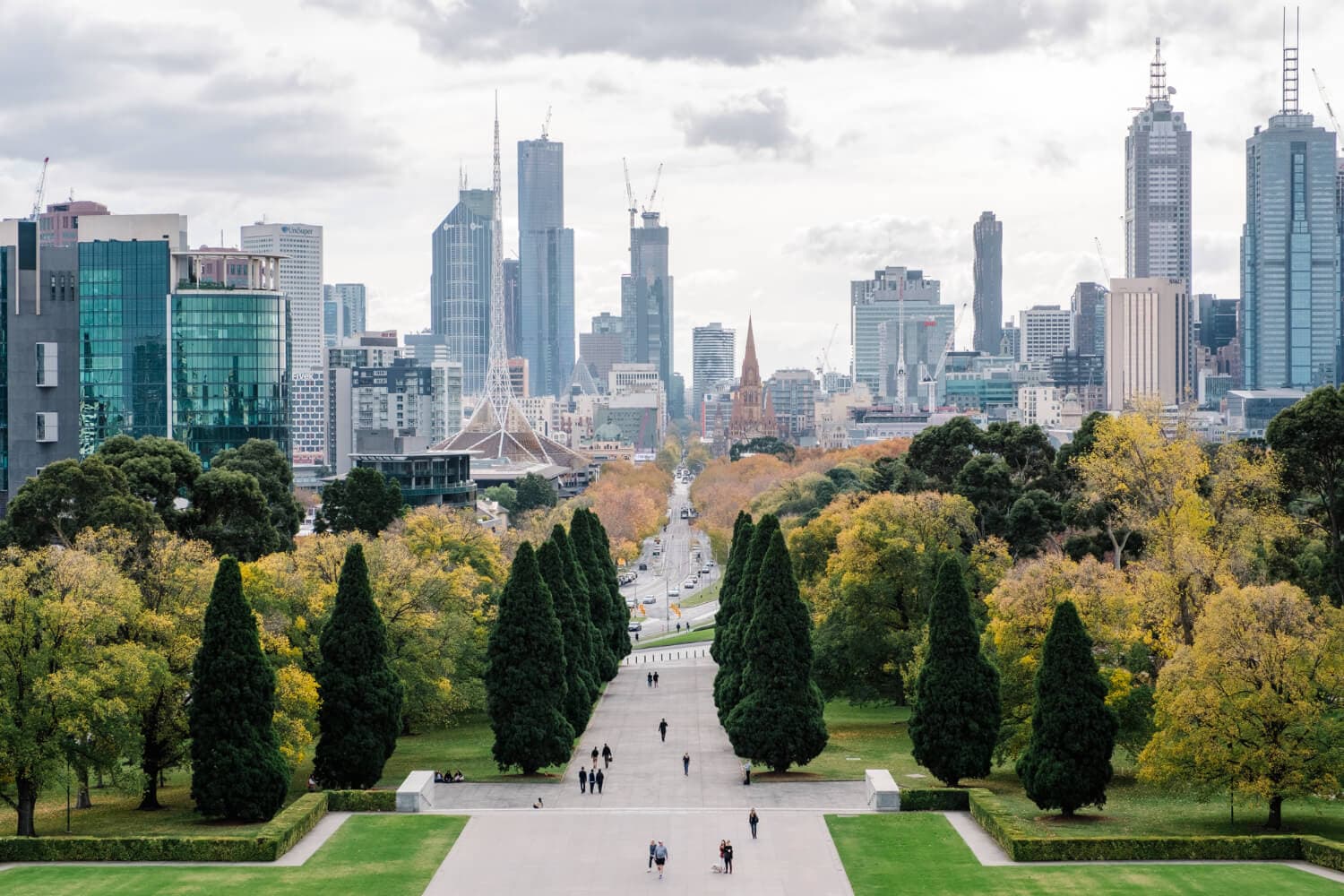
Melbourne has always been a city of cycles. Booms, downturns, and recoveries are part of its property story — and in 2026, that story is entering its most compelling chapter in years. After underperforming other capitals through 2023 and 2024, Melbourne is now firmly in recovery mode, with KPMG forecasting it as the top-performing capital city for price growth in 2026.
For investors, this counter-cyclical moment is particularly exciting. Melbourne's median dwelling value of $830,371 makes it materially cheaper than Sydney and now comparable with — or cheaper than — several other major markets. Vacancy rates have tightened to around 1.4%, the city's population is surging faster than anywhere else in Australia, and Domain expects median house prices to reach $1.17 million by late 2026.
But here's the catch: not every suburb will deliver the same returns. Picking the right location is what separates an average investor from a strategic one. This guide unpacks the outlook for Melbourne's property market, highlights the suburbs best positioned for growth, and explains which areas to approach with caution.
Melbourne's Market in 2026: The Counter-Cyclical Opportunity
The recovery is underway — and the forecasts are bullish.
After sliding through much of 2024 and flatlining in early 2026, Melbourne is now positioned for what analysts describe as a "market awakening." While Perth, Brisbane, and Adelaide have already posted years of strong gains, Melbourne has been the laggard — creating exactly the kind of counter-cyclical opportunity that rewarded early investors in Brisbane and Perth three years ago.
Forecasts for 2026
The most respected property outlooks paint a strong picture for Melbourne:
- KPMG predicts Melbourne will be the standout performer nationally, with house prices climbing 6.8% in 2026 (adding ~$65,000 to the median) and units up 7.3%, outpacing all capitals except Darwin.
- Domain expects Melbourne house prices to reach a median of $1.17 million by end of 2026, representing ~6% growth — marking a full recovery from the downturn and new record highs.
- SQM Research projects national dwelling prices to rise 6–10%, with Melbourne entering a different stage of the cycle — the early phase of a broader recovery rather than the end of a growth cycle.
- CBRE projects Melbourne apartment rents will surge 24% by 2030, with city-wide vacancy expected to drop from 2.1% to 1.4%, driven by undersupply as apartment delivery averages 9,000 p.a. — 25% below Sydney.
House Price Growth Forecasts (Domain vs KPMG) — 2026
Comparison of Domain vs KPMG house price forecasts across capital cities for 2026
House Price Growth Forecasts 2026 (Domain vs KPMG)
Why Melbourne Still Stands Out for Investors
- Nation-Leading Population Growth: Victoria grew by 146,000 people in the year to September 2024 — the largest increase of any state. By 2051, Melbourne's population is projected to hit 9 million, overtaking Sydney. Melbourne continues to be a key destination for overseas arrivals.
- Affordability Gap with Sydney: Melbourne is now the 6th most affordable capital city, with a median dwelling value of $830,371 compared to Sydney's $1.28M. This relative value is increasingly attracting buyers and investors who have been priced out of Sydney.
- Tightening Supply: While listings are currently ~12% above the five-year average (giving buyers more choice), new housing starts are declining and completions are tracking at their lowest in a decade. The structural undersupply gap is widening as population grows.
- Rental Market Tightening: Vacancy rates sit at approximately 1.4% (Cotality), well below the balanced market threshold of 2–2.5%. Median house rents are forecast to reach $595/week by late 2026 (Domain). CBRE expects vacancy to drop further to 1.4% by 2030.
- Counter-Cyclical Positioning: Melbourne has historically been one of Australia's strongest-performing markets over the past four decades. Investors who bought into Brisbane and Perth during their down cycles are now reaping outsized gains. Melbourne appears to be at that same inflection point — prices are below their 2022 peaks, creating a rare entry window.
The Best Suburbs to Invest in Melbourne in 2026
| Suburb | Region | Median House Price | 12-Month Growth |
|---|---|---|---|
| Toorak | Inner East | $4,500,000 | +5.8% |
| Canterbury | Inner East | $3,380,000 | +5.2% |
| Balwyn | Inner East | $2,950,000 | +5.5% |
| Surrey Hills | Inner East | $2,350,000 | +4.8% |
| Mount Waverley | East | $1,720,000 | +7.4% |
| Glen Waverley | East | $1,850,000 | +6.2% |
1. Inner-East Prestige: Blue-Chip Security
Melbourne's eastern blue-chip suburbs remain the gold standard for long-term growth. Scarcity of supply, prestige appeal, and strong demand from high-income households make these areas consistently resilient. Premium family homes in tightly held, lifestyle-driven suburbs are tipped to outperform in 2026.
- Toorak: Melbourne's most prestigious suburb, with consistent demand from high-net-worth buyers. Median approaching $4.5M.
- Canterbury & Balwyn: Supported by elite schools and period homes. Canterbury median ~$3.38M; Balwyn ~$2.95M.
- Surrey Hills & Mont Albert: Leafy suburbs with excellent connectivity to the CBD and strong owner-occupier demand.
2. Middle-Ring Family Hubs: Gentrification in Action
Families are increasingly drawn to middle-ring suburbs with good schools, transport, and lifestyle facilities. These suburbs often sit at the intersection of lifestyle and affordability, and as buyer sentiment improves, they are well-positioned for consistent growth. Suburbs like Essendon and Stonnington East have shown renewed momentum since rate cuts.
- Mount Waverley & Glen Waverley: Eastern powerhouses with strong school catchments and ongoing infrastructure upgrades. Mount Waverley units up 7.4% year-on-year.
- Essendon & Moonee Ponds: Western options with strong appeal to families and professionals. Essendon has shown renewed momentum following rate cuts.
- Ringwood & Blackburn: Well-connected suburbs undergoing gentrification. Blackburn units up 15.9% year-on-year (Domain).
3. Bayside Lifestyle Suburbs: Coastal Appeal Meets Gentrification
Melbourne's south-east and bayside pockets remain enduring favourites, combining lifestyle with accessibility. Well-located townhouses and boutique apartments in these areas are expected to hold up better than generic high-density stock.
- Bentleigh & McKinnon: Strong school catchments and family appeal.
- Cheltenham, Mentone & Parkdale: Bayside suburbs with excellent transport links and lifestyle credentials.
4. Northern Transformation: Affordable Growth Corridors
Northern Melbourne is undergoing transformation, with younger demographics and infrastructure investment fuelling growth. Suburbs in Darebin (including Thornbury and Preston) and Merri-bek (including Brunswick) continue to benefit from gentrification, strong rental demand, and proximity to the city. Heidelberg recorded 25.9% house price growth year-on-year (Domain).
- Reservoir & Preston: Standouts for townhouse and villa unit investments, popular among professionals and families. Preston median ~$1.0M.
- Thornbury & Brunswick: Inner-north lifestyle hubs with strong rental demand and gentrification momentum.
5. Boutique Apartments and Villa Units: Value in Scarcity
While high-rise towers in Docklands and Southbank should still be avoided, established boutique apartments in premium suburbs are showing renewed strength. With KPMG forecasting Melbourne units to grow 7.3% in 2026 (outpacing houses), well-located attached dwellings are an increasingly compelling play.
- South Yarra & Carlton: Character-filled low-rise apartments appeal to students, professionals, and downsizers. Carlton North houses up 21.4% YoY.
- Fitzroy & Collingwood: Trendy inner-north hubs where boutique apartments offer strong rental demand and lifestyle premiums.
Suburb-by-Suburb Investment Profiles
To help guide your decision-making, here's a breakdown of median prices, recent growth, and rental yields across key investment suburbs. Note that Melbourne's yields remain lower than Perth or Brisbane — the investment thesis here is centred on capital growth recovery and counter-cyclical entry.
Melbourne Investment Suburb Profiles
| Suburb | Region | Median House Price ($) | 12-Month Growth (%) | Rental Yield (%) |
|---|---|---|---|---|
| Toorak | Inner East | 4,500,000 | +5.8 | 2.1 |
| Canterbury | Inner East | 3,380,000 | +5.2 | 2.3 |
| Balwyn | Inner East | 2,950,000 | +5.5 | 2.4 |
| Surrey Hills | Inner East | 2,350,000 | +4.8 | 2.5 |
| Mount Waverley | East | 1,720,000 | +7.4 | 3.0 |
| Glen Waverley | East | 1,850,000 | +6.2 | 2.9 |
| Essendon | West | 1,580,000 | +5.5 | 3.1 |
| Moonee Ponds | West | 1,500,000 | +5.0 | 3.2 |
| Bentleigh | South-East | 1,480,000 | +4.8 | 2.9 |
| Cheltenham | South-East | 1,320,000 | +5.2 | 3.1 |
| Mentone | South-East | 1,380,000 | +5.5 | 3.0 |
| Parkdale | South-East | 1,420,000 | +5.0 | 2.9 |
| Reservoir | North | 960,000 | +6.5 | 3.6 |
| Preston | North | 1,020,000 | +6.0 | 3.5 |
| South Yarra | Inner | 2,150,000 | +6.8 | 3.8 |
| Carlton | Inner | 1,180,000 | +5.5 | 4.0 |
Researching a suburb? Get the full picture.
Stop the guesswork. Get a free report with local median prices, growth trends, and expert predictions to help you make confident property decisions.

Where to Avoid
Not every investment makes sense in 2026.
- Outer Growth Suburbs: Melton, Bacchus Marsh, Werribee South. Affordable but lacking infrastructure and have not responded to rate cuts. Cardinia and Macedon Ranges also showed no positive response to 2025 rate cuts.
- High-Density Apartment Precincts: Docklands and Southbank CBD towers face ongoing oversupply, weak capital growth, and heavy investor concentration. Cotality data confirms high-density stock with significant new supply is likely to face continued price pressure.
- High-Crime Areas: Broadmeadows, Campbellfield, and parts of Dandenong deter tenants and buyers, limiting both rental demand and capital growth prospects.
- Areas with Poor Tax Profile: Factor in Victoria's land tax settings when assessing holding costs — some suburbs with lower yields may not stack up after tax, particularly for multi-property investors.
Risks and Challenges for Investors
Taxes and Regulation
Victoria has introduced multiple taxes hitting investors, from land tax changes to the windfall gains tax on rezoned land. Coupled with tenancy reforms that favour renters, holding costs are higher than in other states. The investor share of new lending in Victoria remains below the national average, with some investors shifting to Queensland and WA where tax settings are more favourable.
Interest Rate Uncertainty
The February 2026 RBA rate hike to 3.85% — after three cuts in 2025 — has created renewed uncertainty. Melbourne may be more sensitive to rate increases due to higher housing supply levels and the $2.5M+ "middle market" segment where buyers face competing pressures. However, Melbourne's improved affordability relative to other capitals may help offset some borrowing constraints. Structuring loans with split fixed/variable or offset accounts is essential to hedge against further rises.
Economic Headwinds
Victoria's economy has faced setbacks, with net business reductions and heavier tax burdens on employers. While these factors weigh on short-term confidence, Melbourne's diversified economy — spanning education, healthcare, professional services, and technology — provides a strong foundation for recovery.
The Long-Term Opportunity
Despite these challenges, Melbourne's fundamentals are compelling for strategic investors:
- Population growth is the strongest in the country — 146,000 people in the latest annual count, with Melbourne on track to overtake Sydney by 2051.
- Housing undersupply is structural — apartment delivery will average just 9,000 p.a. through 2030, against demand of 38,000 p.a. (CBRE). This imbalance will drive both rents and prices higher.
- Affordability gap with Sydney offers significant upside potential. Melbourne is now ~35% cheaper than Sydney on a dwelling basis.
- Counter-cyclical positioning: Investors who bought into Brisbane and Perth during their down cycles three years ago are now reaping 20%+ annual gains. Melbourne appears to be at the same turning point — KPMG forecasts it as the top-performing capital in 2026.
- Long-term trajectory: Melbourne house prices are forecast to reach $1.4 million by 2030, representing 29% growth from current levels.
Final Word: Where to Put Your Money in 2026
If you're considering Melbourne property investment in 2026, focus on:
- Blue-chip inner-east suburbs for long-term stability and prestige — these consistently outperform through cycles.
- Middle-ring family hubs where owner-occupier demand drives prices — suburbs like Mount Waverley and Essendon are showing renewed momentum.
- Bayside lifestyle pockets for lifestyle-driven growth and rental resilience.
- Gentrifying northern suburbs like Preston and Reservoir for more affordable entry points with strong yield potential.
- Boutique apartments and villa units in premium suburbs — KPMG forecasts units to grow 7.3% in 2026, outpacing houses.
Avoid oversupplied high-rise towers, speculative fringe suburbs that haven't responded to rate cuts, and weak-demand areas. And with the RBA cash rate at 3.85%, ensure your loan structure protects cash flow — consider split loans, offset accounts, and interest-only periods where appropriate.
The Melbourne property cycle is shifting. KPMG, Domain, and SQM Research all forecast Melbourne as one of the strongest-performing capitals in 2026. Those who act strategically now — with the right suburb, the right property type, and the right finance structure — are likely to benefit as momentum builds. History shows Melbourne rewards patience, and 2026 may be the perfect moment to enter before the crowd returns.

Dylan Bertovic is the Director and Senior Finance Broker at Stryve Finance, specialising in non-traditional lending solutions. He helps clients across Australia with tiny home loans, construction finance, equipment and asset lending, refinancing, and investor loans. With deep expertise in self-employed and renovation mortgages, Dylan is known for crafting tailored strategies that get results